Akademia Sztuk Pięknych w Gdańsku

Autor: Magdalena Świerczek
Akademia Sztuk Pięknych w Gdańsku

Magdalena Świerczek
Kierunek studiów: Grafika
Tytuł pracy: Cykl „Solastalgia”
Promotorzy: prof. dr hab. Janusz Akermann, mgr Vasyl Savchenko
Artystka interdyscyplinarna urodzona w 1998 roku. W 2023 roku ukończyła studia II stopnia na Akademii Sztuk Pięknych w Gdańsku, gdzie uzyskała dyplom z wyróżnieniem, zrealizowany w Pracowni Grafiki Post-cyfrowej pod kierunkiem prof. Janusza Akermanna oraz mgr Vasyla Savczenko. Jest także Absolwentką studiów I stopnia na Wydziale Sztuki UP im. KEN w Krakowie. Podczas studiów uzyskała czterokrotnie Stypendium Rektora dla najlepszych studentów (2019/20, 2020/21, 2021/22, 2022/23). W swojej twórczości zaciera świat rzeczywisty z wirtualnym, używając cyfrowych środków wyrazu, opierając się na obserwacji otoczenia, cielesności i jej struktury. Od 2019 roku aktywnie uczestniczy w wystawach i przeglądach grafiki artystycznej w Polsce i za granicą.
An interdisciplinary artist born in 1998. In 2023, she graduated with a master's degree from the Department of Graphic Arts at the Academy of Fine Arts in Gdańsk, where she received a Diploma with distinction, completed in the Post-Digital Graphics Studio under the supervision of Prof. Janusz Akermann and Vasyl Savchenko.She is also a graduate of the Bachelor's degree program at the Faculty of Art at the Pedagogical University of Kraków. During her studies, she was awarded the Rector's Scholarship for the best students four times (2019/20, 2020/21, 2021/22, 2022/23). In her work, she blurs the line between the real and virtual worlds, using digital means of expression based on the observation of the environment, corporeality, and its structure. Since 2019, she has been actively participating in exhibitions and reviews of artistic graphics in Poland and abroad.
Solastalgia
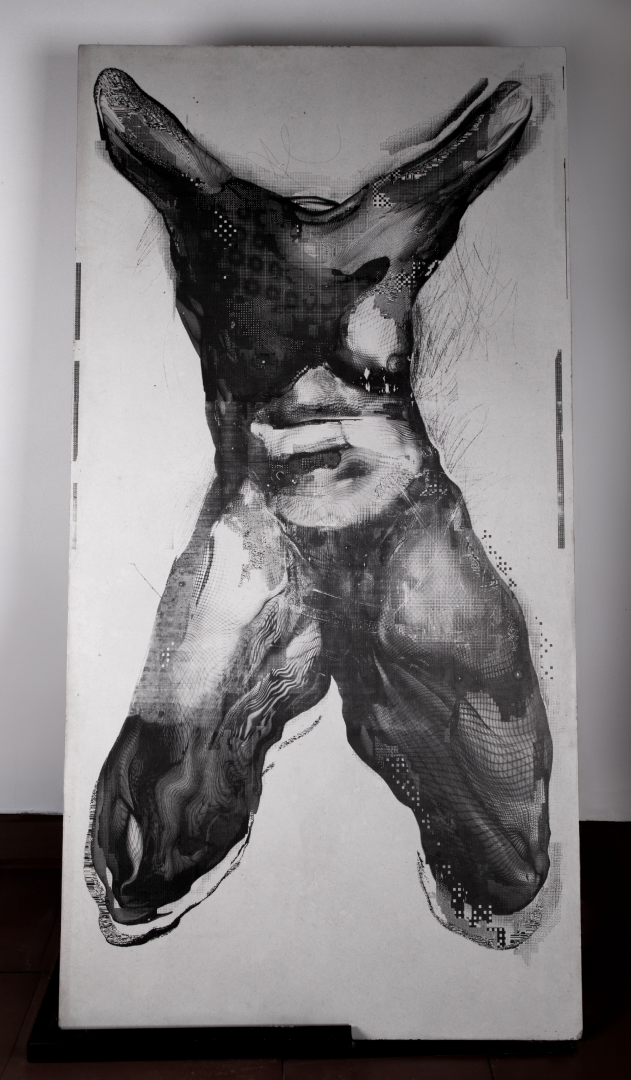
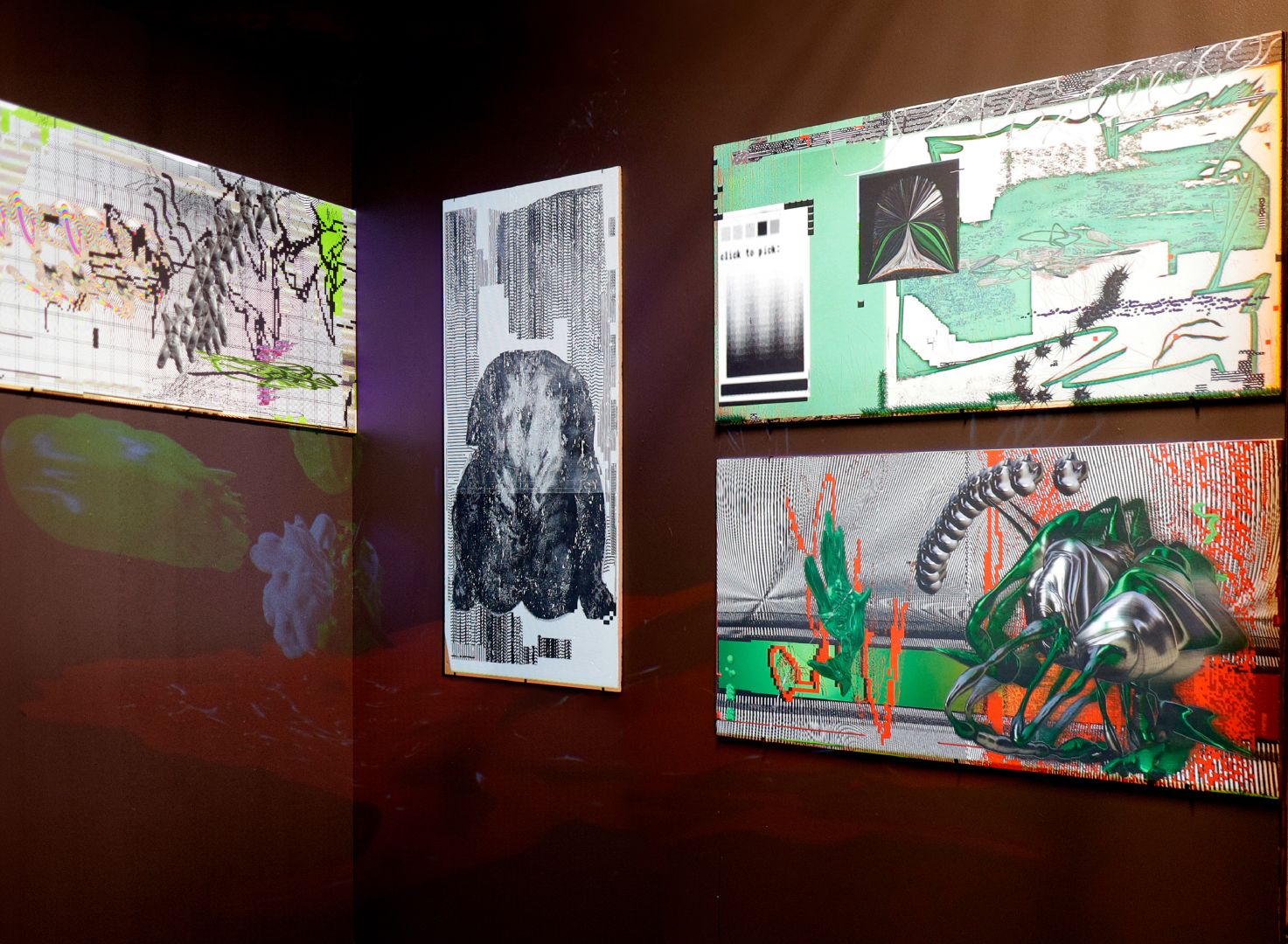
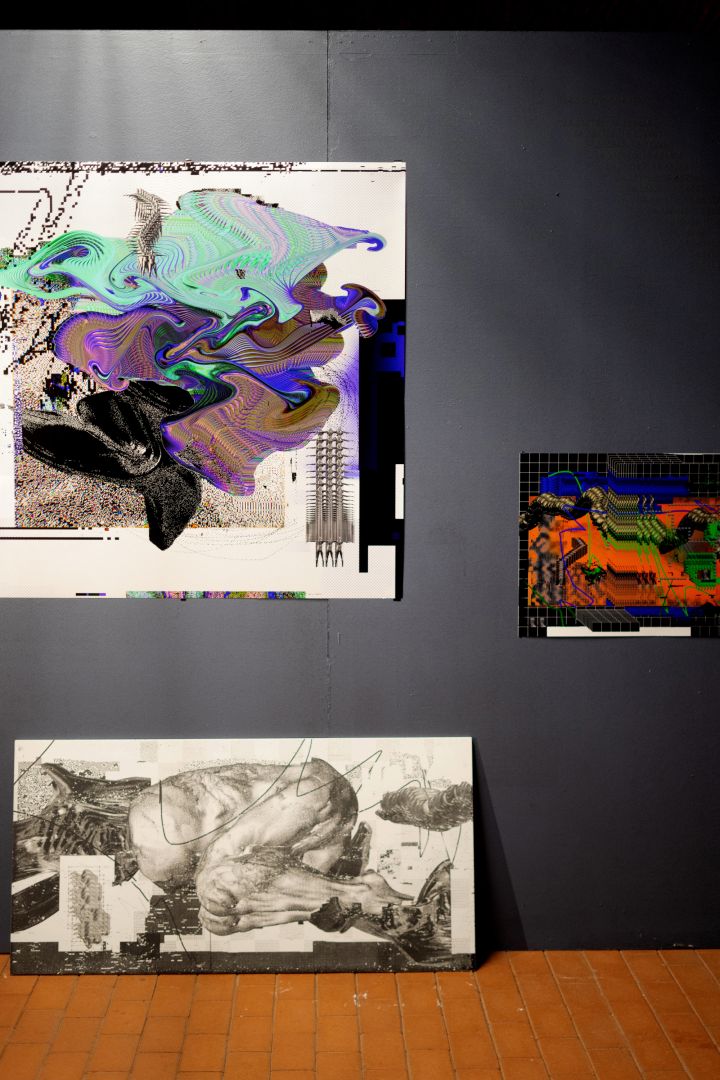
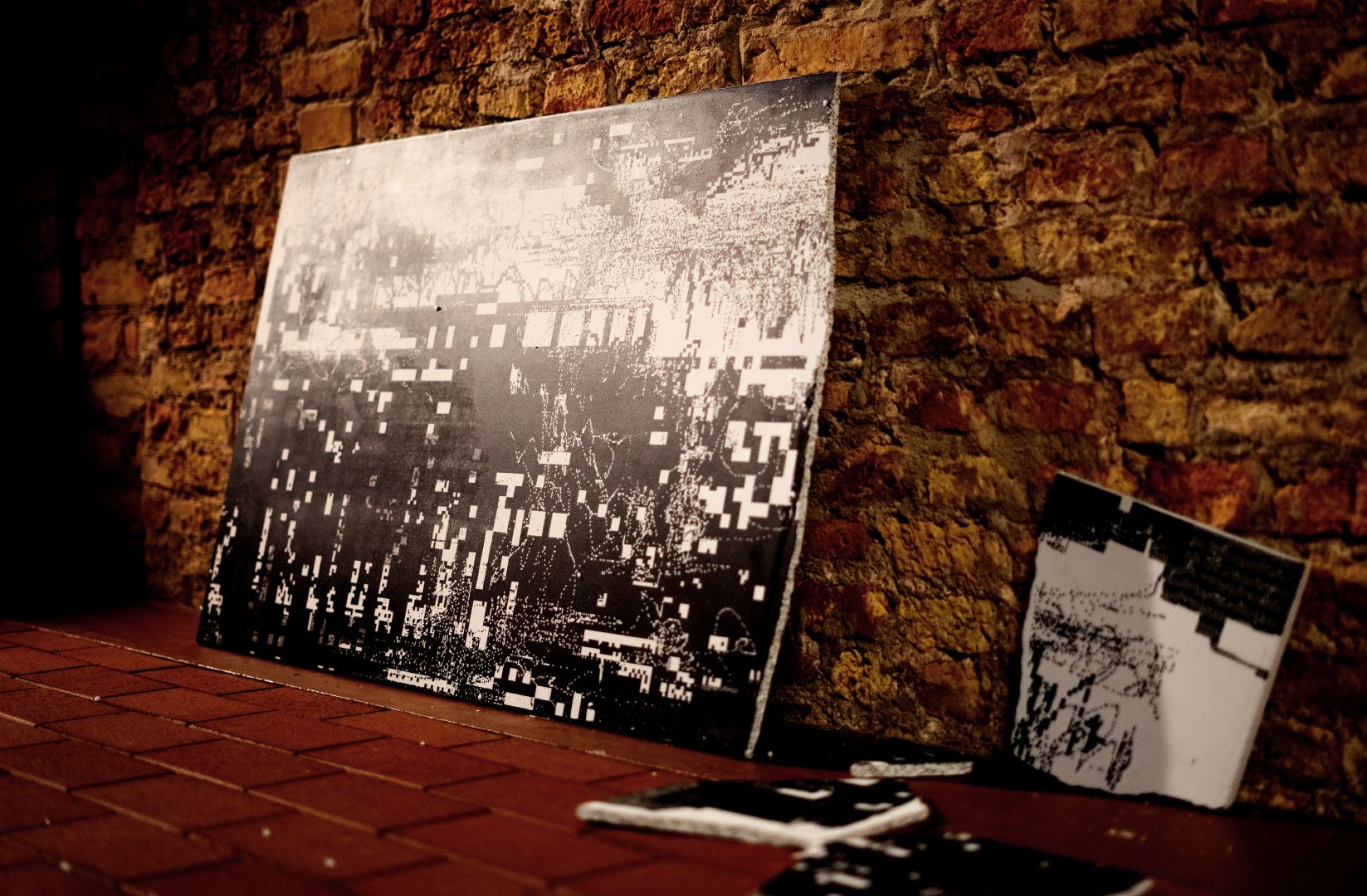
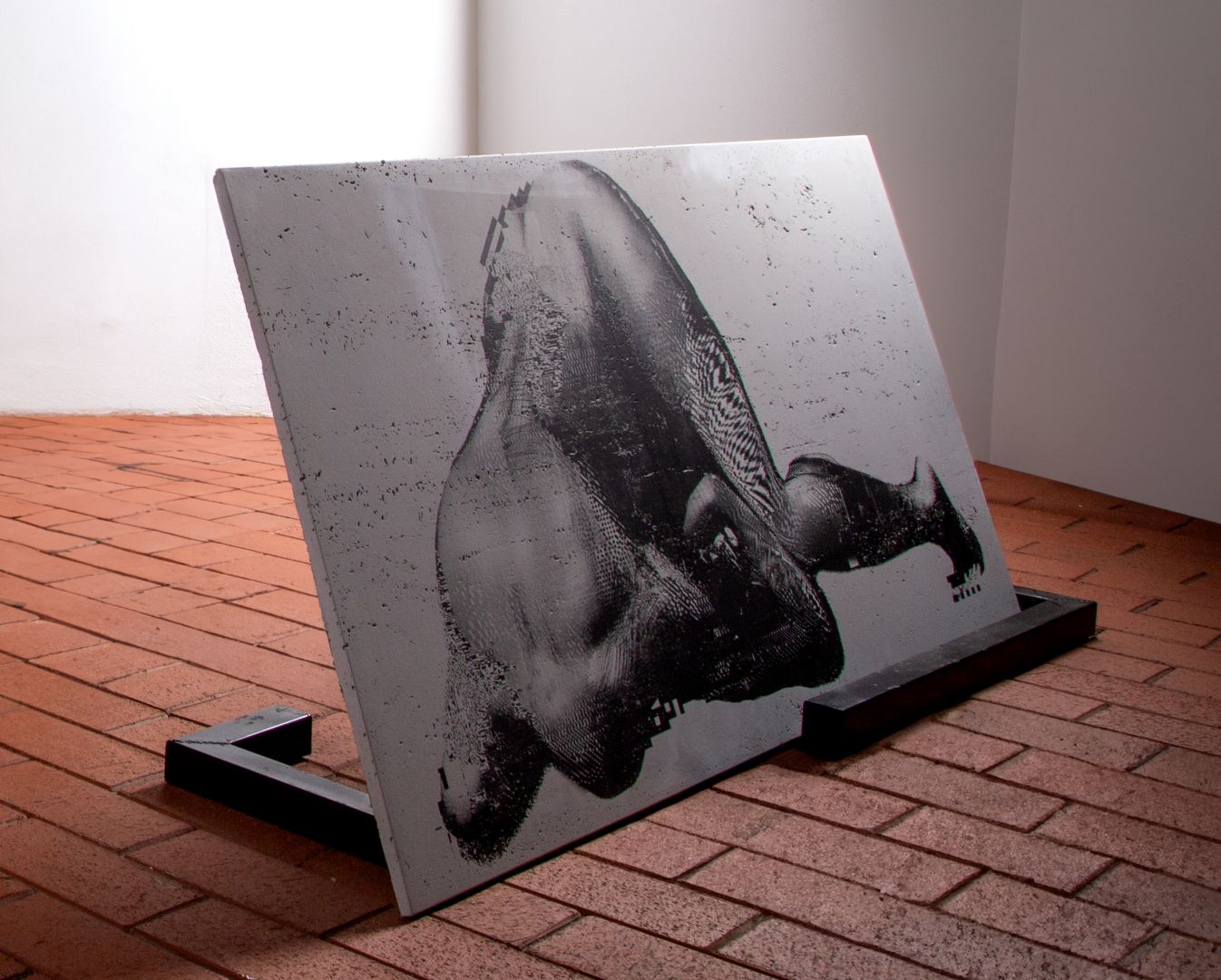
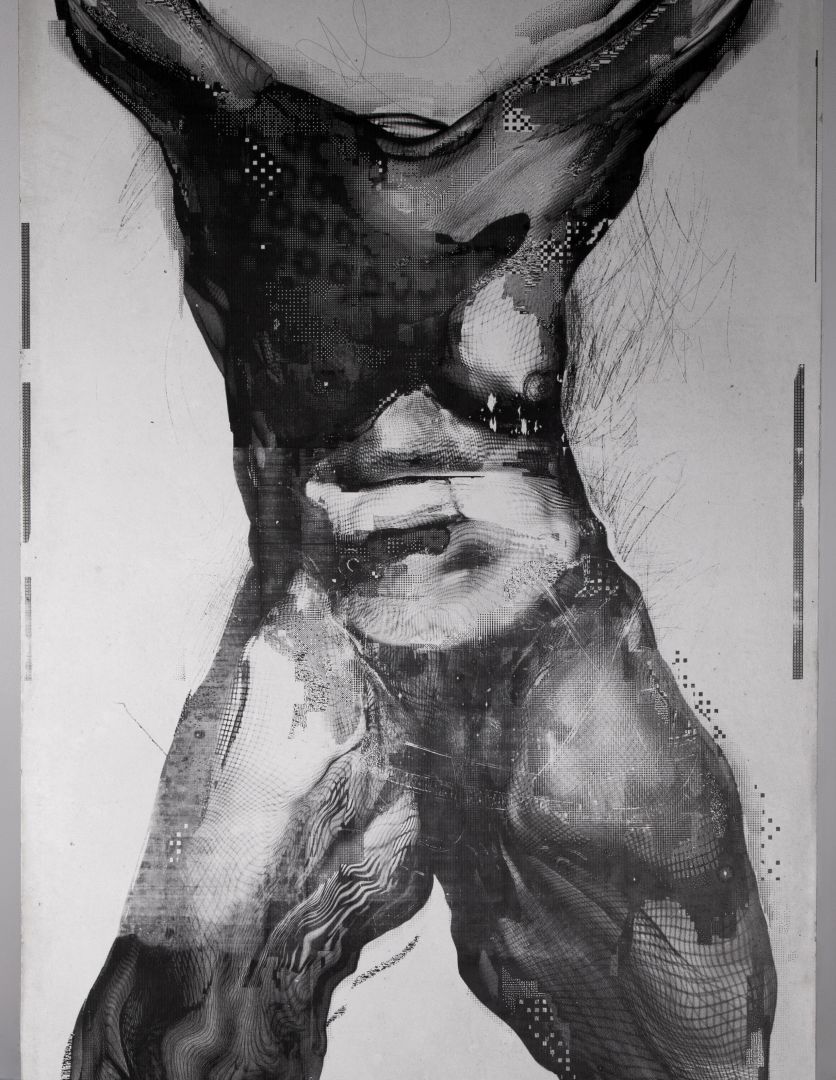
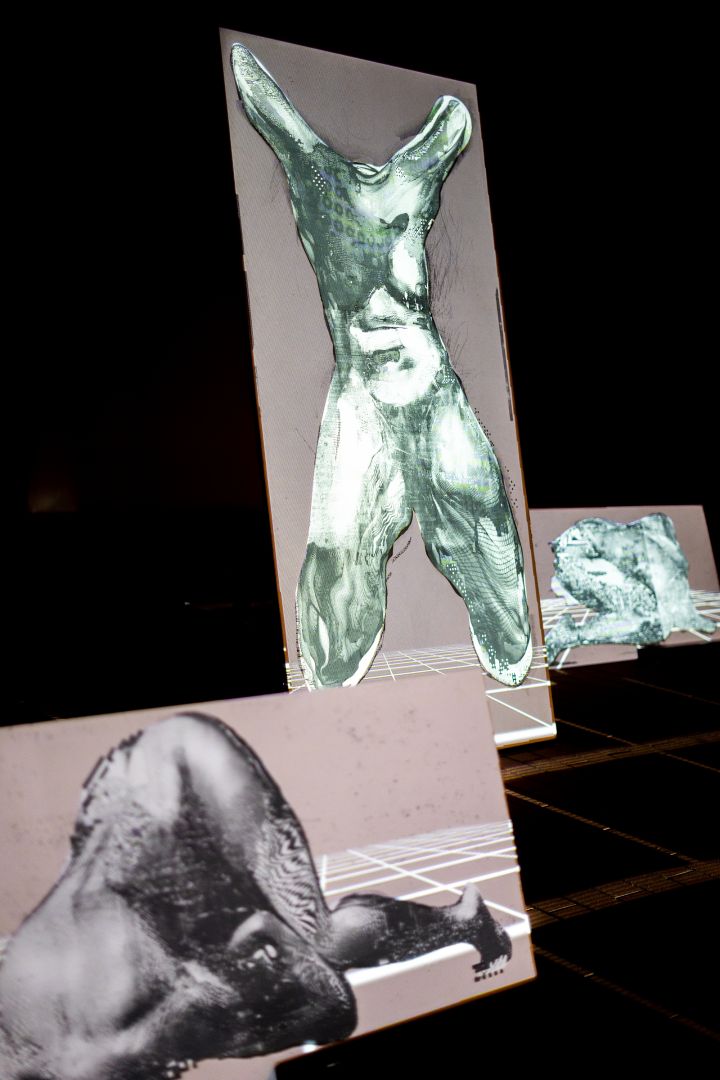
Idea pracy koncentruje się wokół pojęcia solastalgii i niebezpiecznych hiperobiektów, których głębsze znaczenie przybliżył filozof Timothy Morton. Intrygująca jest ich niewidoczność dla ludzkiego oka oraz ich wpływ na proces destrukcji poprzez radioaktywne promieniowanie i chemiczne zmiany w atmosferze. Grafiki przedstawiają dekonstrukcję człowieka zarówno w trakcie, jak i po jego istnieniu, będąc jednocześnie wyrazem emocjonalnego niepokoju. Wizualizują syntezę ciała z doświadczeniem degradacji środowiska naturalnego. Beton, będący nieodzownym elementem współczesnej cywilizacji, stał się kluczowym składnikiem pracy artystycznej. Instalacja graficzna jest zatem subiektywną wizualizacją procesu przetwarzania końca ludzkiego istnienia.
The concept of the work focuses on the notion of solastalgia and dangerous hyperobjects, whose deeper meaning was elucidated by philosopher Timothy Morton. Their invisibility to the human eye and their impact on the process of destruction through radioactive radiation and chemical changes in the atmosphere is intriguing. The graphics depict the deconstruction of humanity both during and after its existence, simultaneously expressing emotional unease. They visualize the synthesis of the body with the experience of environmental degradation. Concrete, an indispensable element of contemporary civilization, has become a key component of the artistic work. Thus, the graphic installation is a subjective visualization of the process of human existence's end.